
NEWEST PoST

PLANTS


This sounds so easy but for much of my life inhaling and exhaling came to me with great difficulty. I had severe asthma as a child that followed me up through adulthood. I relied on inhalers and antihistamines to keep breathing and suffered several lung infections every year.

To deepen my own study of plants and as a method of teaching students I have begun using a Planthenge. This is just a simple model that was inspired by the geometric layout of Stonehenge and the many other sacred stone circles of Celtic Europe, Carl Jung’s model of mandala consciousness, and Paul Bergner’s 4 directions model of studying plants.

The wheel of the year is turning once again and the season of Fall is beginning her gentle emersion with first few leaves descending toward the turning Earth. There is a new chill wafting on the morning air and the Canada Geese have us in their flight path as they embark on this year’s journey South. These signs and more tell us that the times they are a-changing. Many of us, including myself, experience seasonal allergies in the late summer and early Fall that will continue until the first hard, killing frost.
PoETRY


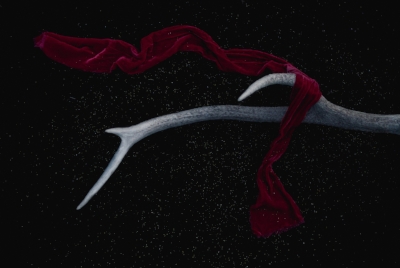
Bone Mending~ As published in We' Moon 2017: a multicultural journal, datebook, and calendar of women's art and writing
PLACE + CULTURE


Once upon a time these awakenings were well marked by magic and ritual as our clans and communities knew that if place and time were to be an instrument for conscious creation, it must be held by the storied, dreaming, dance and play of those that waited and watched as new life teemed upon the surface.

Fall is truly upon us now and this is one of the times of the year that ticks seem to be most prevalent in the Northeast/Adirondack foothills. Spring is the other season when they're highly active. During the summer when we may popularly think of ticks being about, they are less of a problem because they don't thrive in hot or dry conditions. Ticks thrive in cold, damp conditions and although they can be present during both winter and summer, they are far more active at spring and fall.
For me this means that I become more vigilant and discerning when I’m out walking, hiking, or wildcrafting. Ticks are found most abundantly in tall grass, brush-like areas such as where you would find goldenrod growing, and in leaf litter on the forest floor. Any place where you may be standing or walking where the vegetation is high enough that it touches your ankles or legs and part of your clothing or person, including hair, is a place where there could potentially be ticks. I know, it’s crazy!

This all started for me that day when I was four years old and hiking in the Adirondack mountains with my grandfather. He took me along on his daily rounds up the mountain trails above his the cabin where he and my grandma lived, and where he was always tracking the daily activities of the white-tailed deer and collecting his favorite edible mushrooms. We were walking along as usual and I looked off the trail to the slanted rock faces, the smoothed over glacial crevices, the carved ancient grade with brief landings where trees gripped the edges and lifted their branches upwards toward the next turn of rock face toward the zenith.

My time spent in the woods and wilderness has been my greatest teacher, mentor, spiritual guide and therapist. It's what heals me and where I feel contact with a reality beyond the dullness of superficial reality. I am fortunate enough to live in a relatively wild place that is a habitat of extreme temperatures, rainforest amounts of rain and snow fall, and an array of untamed wonderments that exist within an immense vastness of trees, hills, mountains, rivers, streams and lakes. It is here that I have not only grown to learn the beauty of putting roots deep into the soils of family, friends, community and love of place, but also where I have evolved the focus of my soul's practice as a wandering pilgrim, a colonial exile, and devotee to the divine mystery.
ANCESToRS

The ancient oracles were the priestesses and mystics that served their community by entering trance states to communicate with the gods and goddesses of Greece and Rome as well as many other regions in the Mediterranean, North Africa, and Southwest Asia. They had many names but often held the titles of “Sibyl” and “Pythia.”

This June I’ll be taking a return pilgrimage to my ancestral homeland of Italy. I am currently preparing for it by spending time in deep study and listening with my family lineage and ancestry. My grandparents were Italian immigrants and my relationship with them has had a profound impact on the shaping of who I am. I grew up in an immigrant and refugee community in the city of Utica, NY.
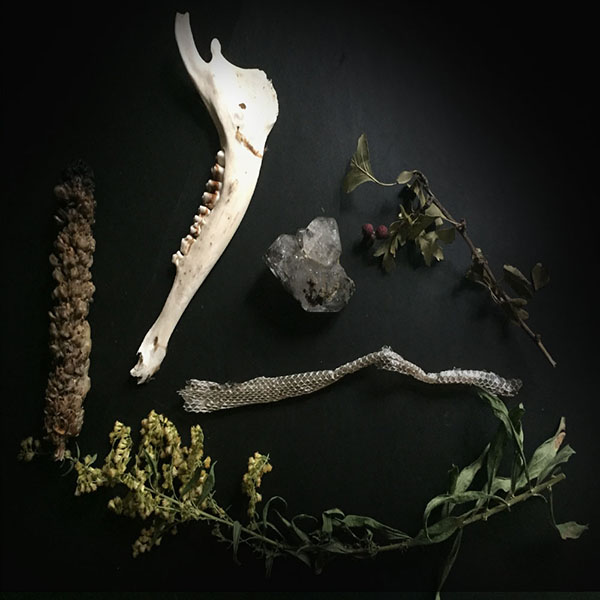
My time spent working with the people, plants, and their relationship has led me far beyond the first few steps I took with my plant ID books into the fields and forests. This is because plants are like that. And nature is like that.
They invite us into a system, a network, a community, or more accurately, they make us aware that we’re already in one.

First of all, I had no idea that I was walking on a bog in the beginning. We had just arrived in Ireland and I was anxious to get out on the land.
It just looked like a field any normal field in central New York State where I live. We had asked a local server at the pub why the “holy well” shown on the map seemed to be on private property and how did others access it.
His answer, “Fences are for keeping the sheep in, not people out.” So we climbed through and through and through.

The concept of “Living in place” is derived from the definition of bioregionalism and has emerged as a new way of connecting to the land and creating a healthy relationship with community, our food, health care and life in general. The term ‘bioregionalism’ was coined by Allen Van Newkirk in the 1970’s. He founded the Institute for Bioregional Research and described a bioregion as “biographically interpreted culture areas…” In other words, he was identifying the inextricable connection between human life, health, culture and the ecology of the land. Land-based activist from Northern California, Peter Berg, further developed the concept as an element of the environmental movement. This movement began as a reaction to the industrial expansion and globalization monoculture that was burgeoning at the time, and still continues to dominate and drive cultural, economic and political values. In the wake of our modern technological and industrial ascension has been the decline of natural resources and widespread, seemingly irreparable pollution along with vast environmentally related health issues. Our collective ideals of competition, production, the amassing of material objects, comfort and monetary wealth drives most Western people away from direct contact with the Earth and the deeper rhythms of nature that once held the dynamic balance of life sustaining forces that fed and nourished our ancestors. These values have also disregarded the essential interdependence of human health on the health of the soil, water, air, plants, animals, bacteria and all that are a part of the network of life. An interdependence that signifies a mutually dependent relationship between synergistic organisms, each with their own unique ecological and life sustaining function.
MAGICK + WITCHCRAFT

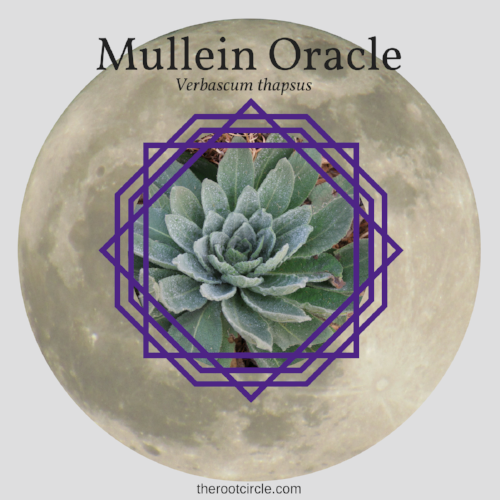
The character, actions, and qualities of plants are not merely causal but are also relational. and learning about a plant with only the intention of knowing what it’s “used for” or what it’s clinical applications are allows us just to know one or two sides or angles of it’s full spectrum of being.